A temporary tattoo comes off in a couple of minutes with things already in your bathroom cabinet. The trick is matching the method to your skin and to where the design sits, because the same rubbing alcohol that lifts a decal off a forearm in seconds is the wrong choice for a child’s cheek. This guide covers how long these tattoos last on their own, the fastest safe ways to remove one, the gentlest approach for kids, what to avoid, and how to apply one so it lasts exactly as long as you want.
How long a temporary tattoo lasts before you need to remove it
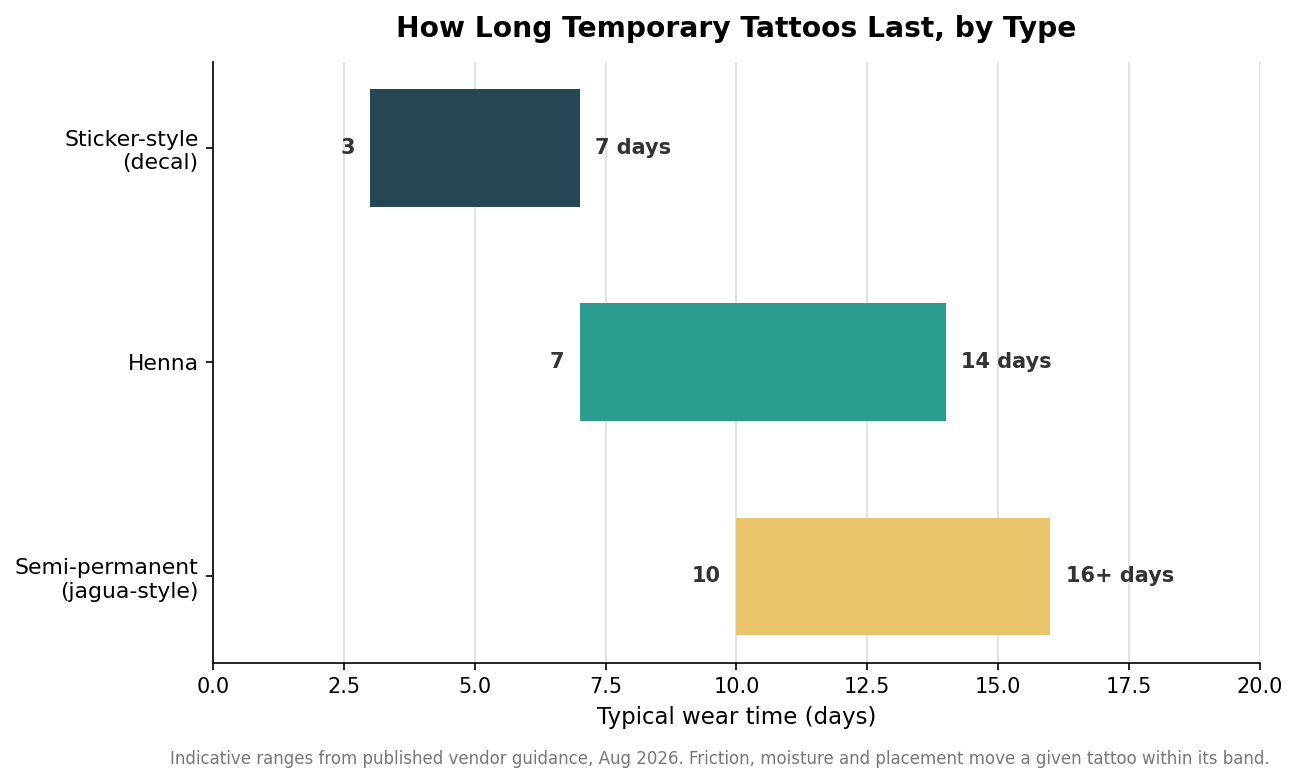
Most of the removal questions people ask come down to impatience with a design that has started to crack and fade unevenly. A standard sticker-style decal typically lasts 3 to 7 days. Henna stains the skin rather than sitting on top, so it runs longer at roughly 1 to 2 weeks, and semi-permanent, jagua-based designs can hold 10 to 14 days or more. Those are ranges, not promises, because where you put the tattoo matters as much as the type. Friction from clothing, frequent washing, sweat, and naturally oily skin all shorten the life of a design, while a low-friction spot like the outer forearm, dry skin, and minimal water exposure extend it. If a tattoo already looks patchy after two or three days, that is usually placement and moisture at work rather than a defective product.
The fastest safe ways to remove one at home
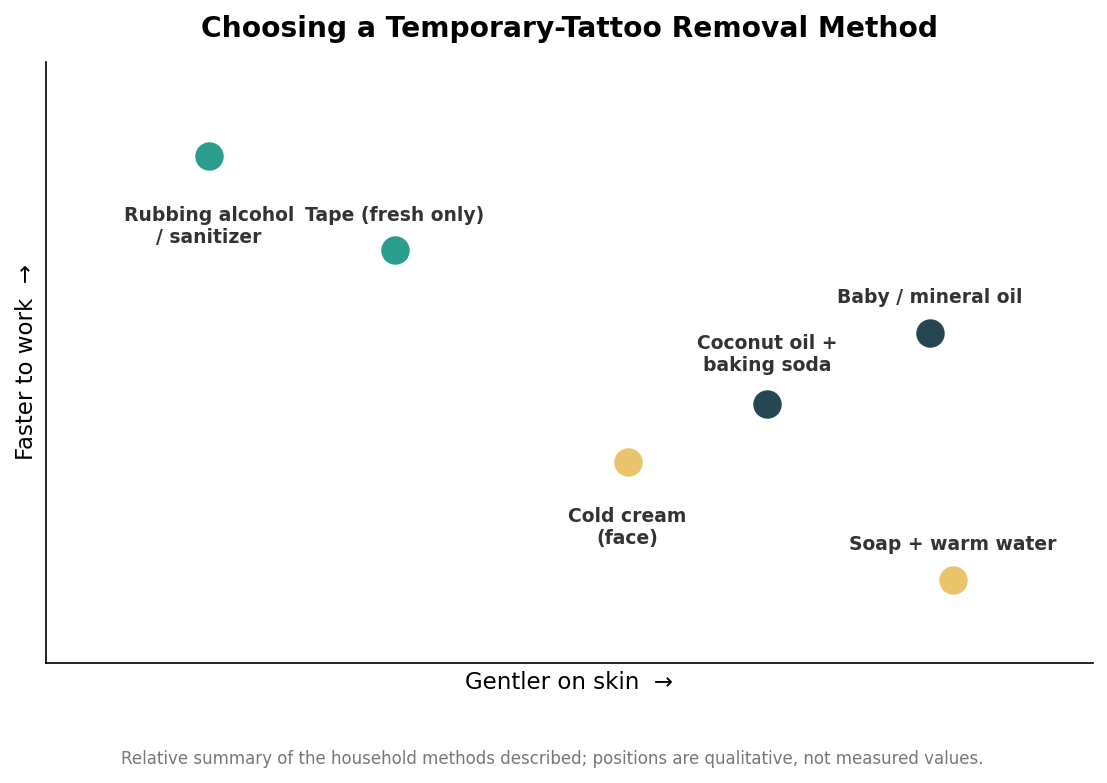
The most reliable remover is oil. Baby oil or plain mineral oil dissolves the adhesive without irritating skin: soak a cotton pad, press it on the design for about 30 seconds, then rub in gentle circles and rinse. It is the go-to because it works on nearly everyone and rarely stings. When you want speed over gentleness, rubbing alcohol or an alcohol-based hand sanitizer breaks down the adhesive and lifts the pigment in 10 to 15 seconds, but it is drying and best kept for occasional use on tougher skin rather than daily removal.
A few alternatives cover the situations oil and alcohol do not. A piece of adhesive tape pressed firmly and peeled away lifts a fresh, lightly set design before it has fully bonded, which is handy the moment you dislike a placement. A paste of coconut oil and baking soda mixed in equal parts works as a mild exfoliating scrub, applied for about a minute, that lifts pigment while leaving skin soft. Cold cream and other oil-based removers dissolve the adhesive while moisturizing, which makes them the better pick for delicate areas. And plain warm water with soap, worked gently for a minute, is often enough on its own for a design that is already on its way out.
Removing tattoos from kids and delicate skin
For children, gentleness beats speed every time. Baby oil or coconut oil is the safest choice, because it lifts the design without the sting or drying that alcohol brings, and it doubles as a bit of a game while the oil sits and does the work. Keep alcohol, hand sanitizer, and vigorous scrubbing away from young skin and away from anyone’s face, where the skin is thinner and reacts more. If a design does not release on the first pass, reapply oil and wait rather than rubbing harder; patience removes far more than pressure does. The same rule applies to sensitive or easily irritated skin at any age: choose an oil, give it time, and stop if the skin starts to look pink or feel sore.
What not to use, and how to care for skin afterward
Some quick fixes cause more harm than the tattoo. Skip nail polish remover and pure acetone, which strip and dry the skin aggressively, along with rough exfoliants like coarse scrubs or abrasive pads, and undiluted essential oils, which can trigger irritation or an allergic reaction. None of these remove a temporary tattoo meaningfully faster than oil, so the trade is all downside. After the design is gone, rinse, pat dry, and apply a fragrance-free moisturizer, and give the area a day off from exfoliating, shaving, and direct sun so freshly rubbed skin can settle. If you ever see a rash, swelling, or lasting redness, treat it as a reaction, stop, and let a doctor take a look rather than reapplying anything to the spot.
Applying and caring so it lasts exactly as long as you want
Removal is easy; getting a clean, long-lasting application is where most of the disappointment actually starts. Prep the skin first by lightly exfoliating, washing, and drying the area completely, with no lotion or oil left behind, since anything on the surface stops the design from bonding. To apply, peel off the clear top film, press the tattoo face-down onto the skin, hold a damp cloth firmly over it for about 30 seconds until the paper backing slides away, then let it air-dry without touching it. A light dusting of baby powder once it dries helps set the ink and cuts the shine so the design reads as more skin-like.
After that, the same factors that shorten a tattoo become your tools for extending it. Choose a low-friction spot, avoid tight clothing over the design, keep water and sweat exposure down, and pat rather than scrub after showering. Done well, these steps add several days to a decal that would otherwise fade fast. And when you are ready for it to go, you already know the two-minute oil routine to take it off cleanly.